
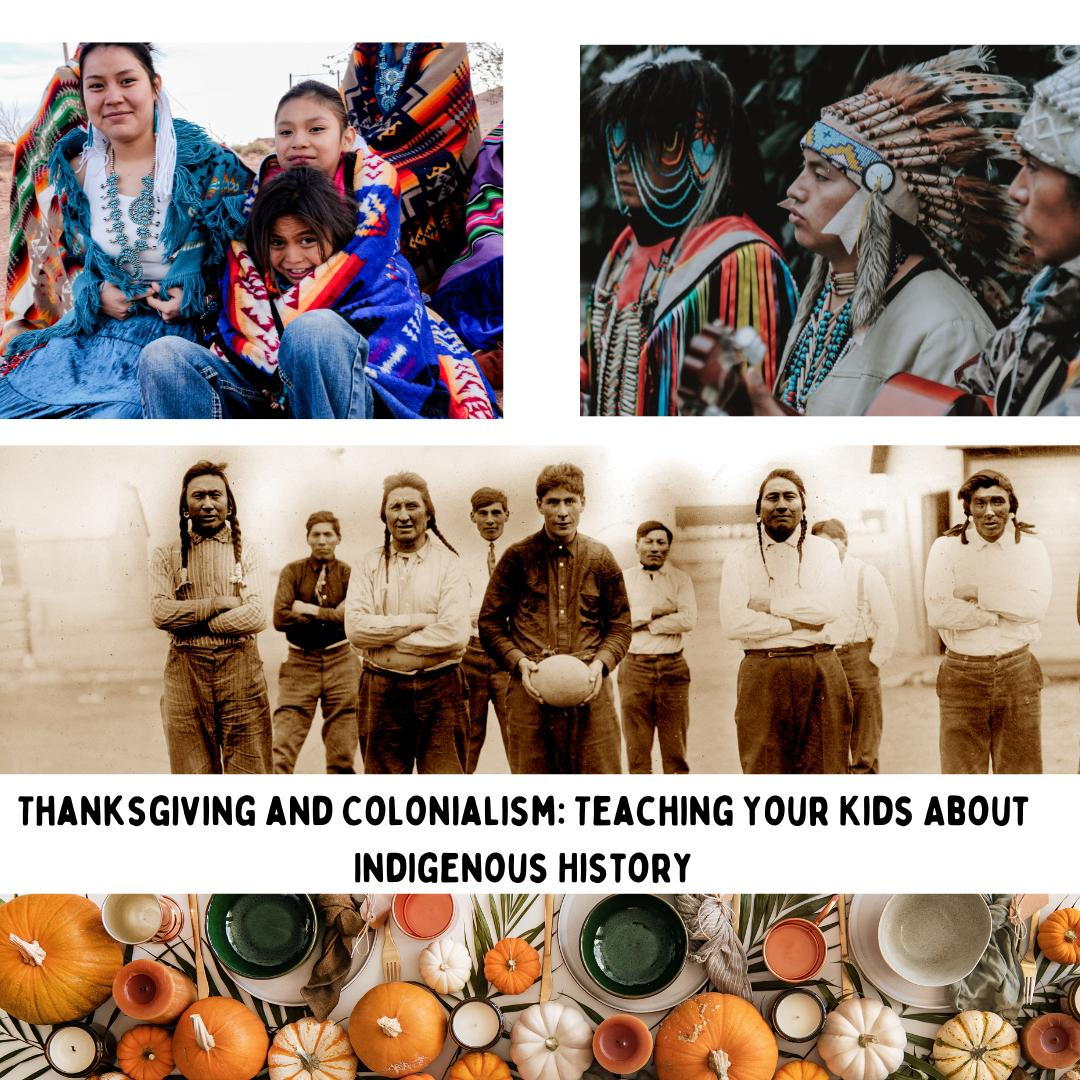
Thanksgiving and Colonialism: Teaching Your Kids About Indigenous History
As Thanksgiving approaches, many families prepare to gather, share a meal, and reflect on the past year's blessings. For many, it's a time of gratitude, family traditions, and creating memories. As a child in my home, I only remember celebrating one or two Thanksgiving meals as a family. Growing up in a house with limited resources was a frequent barrier to celebrating any holiday. It was not until I started my own family that I explored what Thanksgiving means to me and my family and what values and traditions I wanted to implement in collaboration with my partner.
Throughout my journey as a mother and wife, I have been interested in reflecting on the complex history behind many holidays. Thanksgiving has been my newest exploration journey. While Thanksgiving is often celebrated as a joyful occasion marking the "first feast" between the Pilgrim colonizers and Indigenous peoples, it is vital to acknowledge the painful reality of colonialism and the lasting impact it has had on Native American communities.
As parents, we have an opportunity—not just in November but throughout the year—to teach our children about the true history of Thanksgiving, the history of Indigenous peoples, and the ongoing effects of colonialism. In this blog, I want to help you explore how to approach these conversations with your kids thoughtfully and age-appropriately and share ways to make Thanksgiving more inclusive, respectful, and educational for your family. This blog is in honor of Native American Heritage Month (November).
1. Why It’s Important to Teach About Colonialism and Indigenous History
For many years, mainstream narratives around Thanksgiving have romanticized the first feast between Indigenous peoples and settlers, leaving out the harsh realities of colonization, forced displacement, violence, and systemic discrimination that followed. Understanding this fuller picture is crucial for fostering empathy, respect, and awareness in our children.
Teaching kids about Indigenous history isn’t just about reframing or no longer celebrating Thanksgiving—it’s about recognizing and honoring the experiences, cultures, and contributions of Native communities. It’s about giving our children the tools to understand history critically and helping them develop a sense of responsibility and justice.
2. Start with the Truth: The History of Thanksgiving and Colonialism
A crucial part of teaching kids about Thanksgiving is sharing the true history of the holiday and its context in the broader story of colonization. You don’t need to present a "doom and gloom" version of history, but it's vital to offer a balanced view that includes both the celebrations and the suffering that followed.
For Younger Children (Ages 4-7): Keep things simple and use storytelling to help kids understand the larger context. You might say, “A long time ago, some settlers came to America and met the Wampanoag people. They helped each other at first, but over time, the settlers took more land and hurt the Wampanoag people. The settlers didn’t understand how to live on the land like the Native people did, and the Wampanoag lost a lot of their land and way of life.”
For Older Children (Ages 8-12): You can expand the conversation, explaining that while Thanksgiving is a time to celebrate harvest and thankfulness, the arrival of the pilgrims marked the beginning of a long and painful history for Indigenous communities. You can share that after the pilgrim colonizers arrived, Indigenous groups were pushed off their land, faced violence, and were forced to adapt to a system that did not honor their traditions or way of life.
For Teenagers (Ages 13+): Teenagers are more equipped to understand the complexities of history and systemic oppression. Share the story of the colonization of the Americas, including the genocide, land dispossession, and forced assimilation of Indigenous people. You might say, “Thanksgiving is a reminder of how the pilgrim colonizers took over Native lands, and while many people are thankful for what they have, it’s also important to reflect on the history of injustice and how Indigenous peoples continue to face struggles today.”.
3. Teach About Indigenous Cultures, Traditions, and Contributions
While it's essential to discuss the painful history of colonization, it's just as important to focus on the richness, resilience, and beauty of Indigenous cultures. Indigenous peoples are not just part of history—they live in communities with vibrant cultures, languages, and traditions that continue to thrive despite centuries of oppression.
Learn about Native American history and culture: Share stories, art, music, and traditions from Indigenous cultures. Many Native American communities celebrate the harvest, but their traditions, rituals, and relationships with the land are distinct and deep. Introduce children to Indigenous legends, folklore, and teachings, such as the stories of the Iroquois, the Navajo, or the Lakota. Learn about local tribes near where you live.
Introduce contemporary Indigenous issues: Help your child understand that Indigenous peoples continue to face challenges, such as fighting for land rights, access to clean water, and cultural preservation. Consider current figures like Indigenous activists and leaders advocating for their communities, like Deb Haaland (the first Native American Secretary of the Interior) or Winona LaDuke (a Native environmentalist and activist).
4. Support Native American Causes and Encourage Your Child to Get Involved
Thanksgiving can also be a time to give back and support Indigenous communities. Teaching children the value of empathy and activism by supporting Native American causes is an excellent way to make the holiday more meaningful.
Donate to Indigenous organizations: Consider donating to a Native American charity or organization. Many organizations focus on preserving Native cultures, supporting education, advocating for land rights, and promoting the sovereignty of Indigenous nations. Examples include the National Indian Education Association, the Native American Rights Fund, and The American Indian College Fund.
Participate in Indigenous-led events: Check for local or virtual events like Native American Heritage Month celebrations or Indigenous People’s Day (held on the second Monday in October in some regions). Many communities host events focused on Indigenous culture, art, history, and activism that can be valuable learning experiences for children.
Support Native businesses: Help your children understand the importance of supporting Indigenous artisans, farmers, and entrepreneurs. You can explore Native-made goods, such as jewelry, art, and clothing, or purchase books written by Native authors.
My family and I attend our local annual Pow Wows and purchase items and food from the Native American vendors.
5. Reflect on the Holiday with Your Family: Redefining Gratitude
As a family, Thanksgiving can be an opportunity to reflect on what it means to be grateful in a diverse and complex world. Consider rethinking traditional practices around the holiday to make them more inclusive and conscious of their historical context.
Create a new family tradition: Instead of focusing solely on the traditional story of the Pilgrims and their feast, reflect on the lands where your family lives and the Indigenous peoples who have cared for that land for generations. This could be a simple moment of acknowledgment or a deeper conversation about land stewardship and respect for the environment. You can also incorporate storytelling practices. I like to use the story cube game to practice storytelling.
Incorporate Indigenous teachings into the dinner table: Consider sharing an Indigenous blessing or reflection before the meal, acknowledging the land and its original caretakers. For example, many Native communities offer prayers of thanks to the land, animals, and ancestors.
Educate with books, movies, and resources: Numerous age-appropriate books and films provide insight into Indigenous cultures and history.
Some of our family's favorite books and documentaries include:
“We Are Water Protectors” by Carole Lindstrom
“The Secret of the Indian” by Lynne Reid Banks
“Honest History: A Native Story” by Honstey History
“ We Are Still Here!: Native American Truths Everyone Should Know” by Traci Sorell & Frane Lessac
Doc. "Rumble: The Indians Who Rocked the World"
Doc. "The Canary Effect"
6. Acknowledge Mistakes and Model Growth
As a parent, it’s important to acknowledge when things haven’t been done right and model growth for your children. Many families have participated in Thanksgiving traditions without fully understanding the more profound implications of the holiday’s history. Use this as a teaching moment: admit past ignorance, learn together, and make intentional changes. This helps children understand that growth is a lifelong journey and that acknowledging mistakes is crucial to creating a better future.
Reclaiming Thanksgiving for Truth and Reconciliation
Thanksgiving doesn’t have to be a time to ignore uncomfortable truths or avoid difficult conversations. Instead, it can be an opportunity to model empathy, respect, and social justice for our children. By teaching them about colonialism, supporting Native American communities, and emphasizing the rich history and ongoing contributions of Indigenous peoples, we help create a more inclusive and compassionate world.
As we reflect on our blessings this Thanksgiving, let us also be mindful of the struggles others continue to face. We should teach our children the importance of standing in solidarity with those who have been marginalized. Together, we can reshape this holiday's meaning to reflect gratitude, respect, justice, and awareness.
Tri-Synergy Counseling is located in Brentwood, Tennessee, in Williamson County.
I, Victoria Valdez, owner of Tri-Synergy Counseling, recognize that we occupy land inhabited initially and cared for by the Cherokee, Chickasaw, Choctaw, Creek, and Shawnee Peoples. We honor and pay respect to their elders and descendants — past, present, and emerging. We acknowledge that settler colonization resulted in land seizure, disease, subjugation, slavery, relocation, broken promises, genocide, multigenerational trauma, and forced removal, subjecting them to the atrocity known as the Trail of Tears. This acknowledgment demonstrates our responsibility and commitment to truth, healing, and reconciliation and to elevate the stories, culture, and community of the original inhabitants of Williamson County. We are grateful to have the opportunity to live and work on these ancestral lands.
Articles & Resources:
Native American Indian Association of Tennessee
Indigenous Children, Survivance, and the Times We Are In | Medium
How To Teach Kids About The True History of Thanksgiving | themompsychologist.com
Decolonizing Thanksgiving: A Toolkit for Combatting Racism in Schools
Disclaimer: This blog post was created with the assistance of ChatGPT, an AI language model developed by OpenAI. The author has reviewed and edited the content for accuracy and relevance to ensure it aligns with the intended message. The author has also included their own stories and professional knowledge. While AI provided insights and suggestions, the author made all final content decisions."